Monday, June 21, 2010

The Ghani Palace Hotel

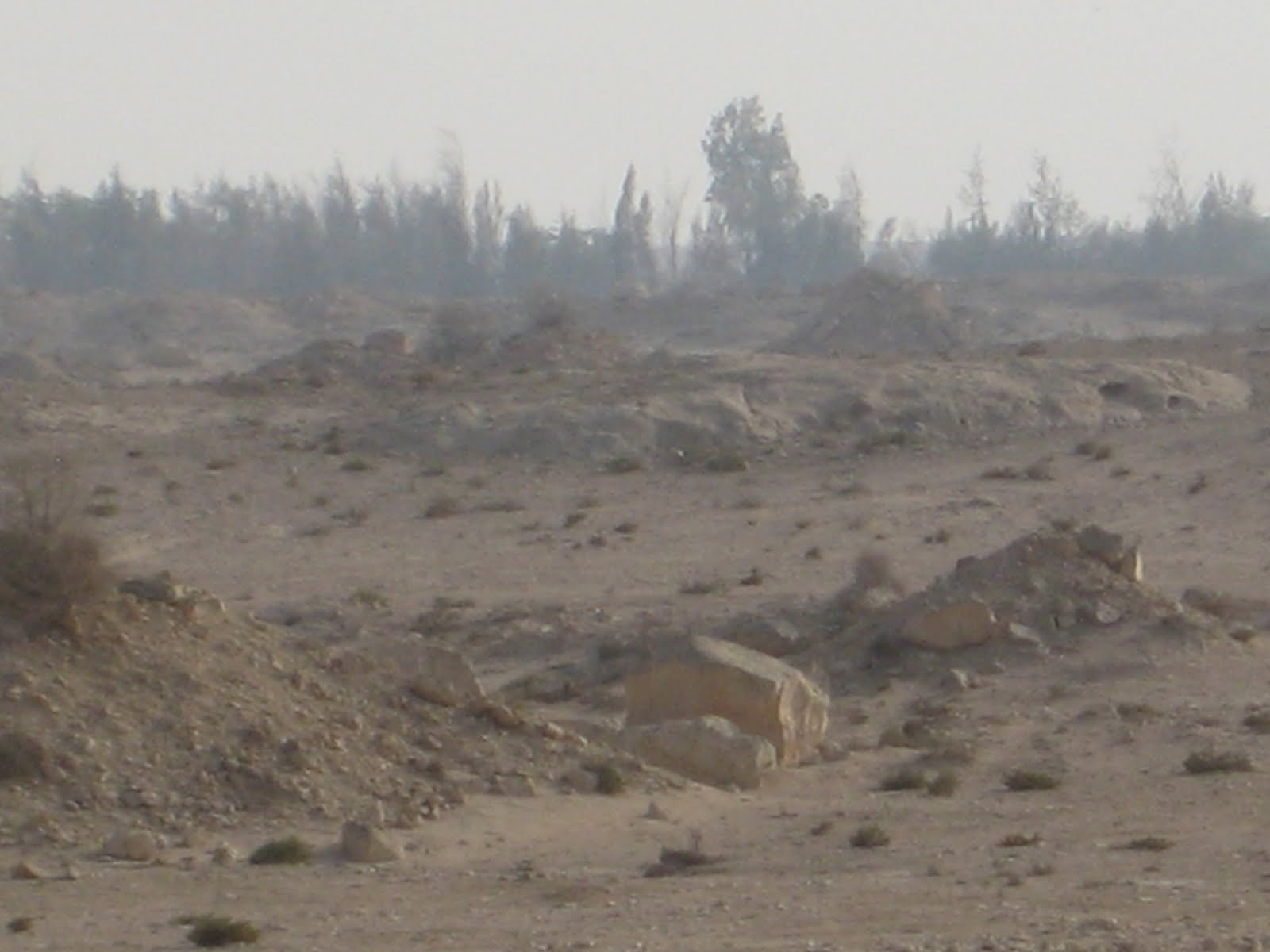
The Ghani Palace Hotel crouches on the shores of the Arabian gulf, her faded glory gently decaying into the desert. Once she may have been considered beautify, but her charm had gone grey, and the process had not been graceful. In her later years, she received few guests into the warrens of her hallways, and when she did, it seemed to come as a great surprise. As her splendor waned, she became more of an architectural bookmark for beach front property rather than a page of text for some form of holiday nostalgia. Foot steps in her halls and many stairwells raised dust and sent the staff into a panic.

The feet of the Ghani Palace herself were like a pair of Roman sandals, harkening back to a mythological past, strips of balconies strapped wide spaces together. Small shops and offices made up the lower layer of mud this faded lotus stood in. Grimy little stores sold philosophical signs like, " If you drink, you die. If you don't drink, you die." There was a video store that rented Hollywood and Bollywood films with all the sex and violence left in, unlike the cinema versions that edited those parts out, resulting in a certain amount of plot ambiguity (if any of the film was left after the excision). There were small offices with crowded desks and empty chairs.

There were few actual people in the Ghani Palace Hotel. Guests were a disturbance that confused the staff. When ten guests suddenly arrived one day, it caused a shock that ran through the hotel and made her sigh and shift uneasily. Her elevator, already old and tired, groaned so audibly that any guest foolish enough to use it quickly learned the error of her ways and retired to the stairs, although this move disturbed other furry and feathered denizens of the hotel's upper and lower reaches. The stairs trailed through the Palace in intestinal twists and shifts. No one flight completely reached from top to bottom which resulted in elevator-leary guests wandering up and down random hallways searching for the next set of stairs. Pentacles appeared in the faux marbling of the walls. At the bottom of one set of stairs, many chairs clustered around the door ready to break free and run wild.

But the greatest shock to the frayed nerves of the venerable Ghani Palace Hotel was the invasion of the guest rooms by actual guests. Towels that had lain dormant to peacefully house sophisticated mold cultures were disturbed. Windows hosting sediment were shaken. Floors that supported a complex strata of desert dust and indigenous dust bunnies were trodden upon. The Ghani Palace shuddered.

The crumbling, abandoned apartment buildings across the street laughed at the Ghani Palace's discomfort. They happily hosted their cats and pigeons who did not try to wash their non-existent windows, sweep their dirt floors, or wipe their broken counters with disinfectant. The Symphony Building, the glass and steel high-rise next door, did not even glance toward the Ghani Palace who she considered an eye sore compared to her up-to-date superiority.

But the bulking, embarrassingly ornamented presence of the Ghani Palace Hotel could not be ignored even as the paint flaked off the balconies and her house-keeping staff puzzled over guest requests for bath mats. Her lumpy profile dominated the skyline available to her, and her distinctive costume jewelry of balconies, arched, windows, dusty carpets and odd ornamental empty pots added to her disturbing charm. The Ghani Palace was not so much a hotel as an invitation to an alternate reality, another Kuwait within Kuwait.

Tradition and Modernity: Eternal tension


Academic Geekiness level: high
Caffeine level: critically low


When mental health professionals do stress tests and measure life events that cause the highest stress that can influence depression and other fun states of mind, they always cite change as the highest stressor. Death, moving house, and divorce are right up there as the highest stressors. So when one is considering the issues of culture change where one faces the death of a way of life, not just moving house but completely changing what the house and neighborhood look like, and divorcing oneself from the past as a way of embracing modernity, the result is a pretty stressful situation: welcome to the Gulf. As a result of the lightening fast pace of change, there is understandably a concern with cultural heritage and national identity. However, the fast pace of change means that there are generational difference in how the past is envisioned, how tradition is measured, and how cultural values keep pace with changing circumstances.


In Qatar, many Qataris would assert that Qatar's history began in 1971 when Qatar became a sovereign state, but implied in that assertion is that there was nothing in Qatar before that time. This is not true: this area, while not involving huge Cairo like cities, did have people who wandered through for trade, people who lived on the coast and fished and dove for pearls, and clans who claimed the territory for its own. But this was not a building people. Architecture was temporary, and even if you build a mud-brick building or a palm frond hut, it would blow down or melt away and nothing was lost. History was kept in oral tradition and in family relationships.

In "modern" society, one keeps ones historical records in things like books and buildings. Doha and Dubai had neither, but began to accumulate them once the late 20th century wealth began to pour in. As they adopted the material culture of "progress", some material values crept in with the things, and consumer culture with its value of Stuff, became a force to be reckoned with. If Stuff becomes the keeper of history and the symbol of cultural identity, then buildings, clothes, and iconography become more important, especially if you have to use them to make yourself distinctive to an outside world pouring in.

In Kuwait, there have been a few catastrophic events that seem to have influenced the Kuwaiti people's relationship with material culture. Kuwait City has been around for 250 years or so because it was a merchant center. Thus, when the oil wealth began to pour in during the 40's and 50's, there was a feeling of really arriving on a grand stage. Farah Al-Nakib, a graduate student at the London School of Oriental and African Studies, reports that in oral histories she did concerning how people feel about buildings and memory, people who had experienced life pre-oil and post-oil in Kuwait said, "Let the old buildings be demolished! It's the new Kuwait that deserves our admiration." And so Ms. Al Nakib likens Kuwait to an Etch-a-Sketch where every time a new building phase comes in, they just raze everything before that time to the ground and start again.


We drove through the old shopping district from the 1960's, which was was very busy, and there were store owners who were fighting the new development scheduled to demolish their stores. There they were stubbornly hanging on, lights on, store full of merchandise, and above (and sometime beside them), the buildings were being torn down. Rebar hung from crumbling cinder blocks next to a brightly lit store full of toys.


On the waterfront in Kuwait City, there are buildings from the early 20th century of one or two stories, with the sky scrapers of early 21st century Kuwait towering behind them. Right on the water front is a new mall with many many fake wind towers decorating it by way of asserting its traditional right to be a shopping area that contributes to national identity.


While we were having our architectural tour of downtown Kuwait City, a dust storm complete with thunder and lightening blew in. The wind whipped up while we were visiting some of the traditional buildings and all we saw was the tops of the trees blowing, but as we got out on the street, the dust surrounded us. Visibility was 100 feet, but none of the shoppers quit shopping. On the way back to the hotel, I asked to be let off at the supermarket to get some cleaning supplies for the hotel room (we have slightly different habits from housekeeping when it comes to cleaning), and I walked home in the wind and dust. It was actually not so bad, and nobody else on the street seemed to notice that there was anything going on. I took a hint from the crowds on the street, wrapped up, and joined them in taking no notice.

But on the topic of change, it seems that Kuwait is in a cultural crossroads when it comes to how to remember history. There is the pre-oil history to remember, there is the post-oil history, there is the invasion of 1990, and there is the continuing progress of modernity. Around the city, there are crumbling relics from the 60's, there is iconic architecture from the 70's, there is the urban development of the 80's , there is the reconstruction of the 90's, and there is the development of a "heritage industry" of the 00's. It is amazing to see everything all at once in one frame. Kuwait has a rich cultural history: it will be very interesting to see how the older generation who is all for moving on will reconcile how to remember with the younger generation who has grown up in the New Kuwait and might want to hold on to parts of it.

Wednesday, June 16, 2010

New Word Familiar Concept


I learned yesterday about an Arabic word from a young Qatari lady who was describing how the desert can be a rejuvenating place to be. According to the modern Delphic oracle, the internet, the word Brira, from the root "yebra" (to heal), means the feeling of a fresh breeze blowing through your soul and healing you of all care when you stand out in the great wide beauty of the desert. What a wonderful word! I think mountains and rivers can create Brira also. Living in Doha, I must say, in only mild complaint, I feel a distinct lack of Brira.

There is a wonderfully insightful Qatari woman who keeps an amazing blog about life in Qatar called http://thebrirafile.wordpress.com
In your copious spare time, Gentle Reader, ;-) I recommend a trip to the BriraFile.

Malls in the Gulf States as Fantasy Social Centres

Malls are the new city centers in cities that have no center. The mall is air-conditioned and has all the entertainment a person could want, if you have money to spend and time to spend it. In a world of material excess, where progress means "more stuff" then malls are the epitome of joy and fulfillment. So if we accept as a premise that our lives outside the home are about the entertainment of more Stuff, and we socialize around Stuff, then the places where we get our Stuff need to be as entertaining and iconic as possible. The malls we have visited in Abu Dhabi, Dubai, and Doha have been not just museums of contemporary material culture. They have been positively shrines to materialistic excess and the fantasy that shopping euphoria transports a person to another world, nay, another dimension. Here is the mall where there is a ski slope called 'Ski Dubai'. When you go in to sled or ski, you get a ski jacket and pants with the Ski Dubai logo on it. Everybody is there wearing the same parka and ski pants. If I thought Perfect North Slopes was an entertaining joke, I stand corrected. It is practically an alpine paradise when one is confronted by Ski Dubai. There is a chair lift and 1k run, complete with a sledding hill and kiddie park. There is a 4 meter tubing run also. Whoo hoo. It is also lit with slightly blue tinged lights. People press their noses to the windows outside to watch, so it entertains not only as a ski slope but as a sort of strange reality show as well.

Then there is the aquarium and water fall at the Mall of the Emirates. You can visit the aquarium separately from visiting the mall, but just in walking around, a person can still enjoy the big fish tank. Evidently, the tale is told how it sprang a leak one day and the mall had to close. (insert Fear, Panic, and Boredom here). The water fall at the Mall of the Emirates has statues of men vaguely reminiscent of Ken dolls diving down it. It makes a lovely noise, and you can hear it far down the hallways of Stuff. Outside the Mall of the Emirates is a large pond with dancing fountains that people line up to see. It is evidently quite the popular family outing, rather like the drive in movies, which I also read in the paper that they are starting up a huge drive in out in the desert. There are reported to be little air conditioning units you can put on the window of your car so you don't have to leave your car running during the movie. Ah, the life of freedom in the desert. I am not making this up: they are going to show Laurence of Arabia as their first movie at this outdoor theater.

Doha has its own iconic mall: Villagios. This mall, in addition to having a lot of Stuff, also has a canal with gondolas that people who are tired of looking for Stuff can ride in. We went to Villagios on a Friday night, so it was packed, I am telling you, packed with families. Everybody wanted a ride down the 200 meter (more or less) canal. The gondolas are motorized, but there is a south east asian person standing on the back guiding the boat along the canal with a rudder attached to the faux gondola pole he is holding. The ceilings are painted with clouds, and along the mall path there are faux Venetian Ponte Vecchios periodically for crossing the path. But if the Venetian theme pales, you can go over to the food court and watch people at the skating rink. According to a sign there, the Gondolinas are the local figure skating team who compete there (with whom one wonders), but there is rumored to also be a hockey team organized by (surprise) the local Canadian ex-pats. The local Australian ex-pats have organized the surfers who like to chase the storm surges off the East coast.

Malls. Personally, they give me hives. The stuff stuff stuff. I feel oppressed by the material culture, but after awhile it gets humorous. We found a cell phone store that had gold plated and titanium cell phones for $30,000. The sales man said it was all about lifestyle. Yup.

Monday, June 14, 2010

Peak Water

Academic Geek Level: High
Caffeine level: low
Utter Bafflement level: 11 on a scale of 10

Welcome to Qatar. It is level, rocky, flat, hot, and has a two month period in Winter where there is a bit of rain and some things try to turn green. Until desalinization plants, there were only a few thousand people who would hang around anywhere for any length of time, and they moved around a lot.

Peak water has already been reached in the Gulf States but the full implications of this issue will not be felt until Peak Gas has been reached. in the Gulf States, about 90% of the usable water is from desalinization. This means that the water is very very expensive and, as a result, highly subsidized. Nobody pays the real price of water. In addition, people rely on bottled water and to my utter amazement, there is no large scale recycling effort. Not surprisingly, there is also a huge problem with waste management and over-flowing landfills. In the UAE we learned that the per capita trash generation was among the highest of the developed world. To add to the issue, the population in these countries has doubled in the last 5 years.

However, it is cheap gas, in Qatar, that keeps the impact of these long term environmental problems from having the impact that they may in the future. Qatar has huge reserves of natural gas, and due to strategic investment in gas technology, specialized port facilities, and pipeline investments with other countries, the World Trade Organization has estimated that Qatar has enough gas to last until 2500 or something huge like that.

Somehow the romance of water eclipses all sense. Palm trees cost about $2.00 per day to keep alive: these are popular landscaping items and represent a huge cost. Around and inside buildings, the landscaping is lush and in profound denial of the natural environment. The need to landscape with non-native fauna to create a fantasy land of luxurious amounts of water leads architects to try to create this landscape even when all evidence for its success is to the contrary. In our hotel, there are huge decorations of *fresh* flowers every day. The fossil fuels that this beautiful arrangement represents in water desalinization, transportation, and air-conditioning to make it last all day is HUGE.

I read in the newspaper that Qatar is investing in real estate in other countries so it can grow food there to import when the famine strikes and peak water's effects become real. Already the newspaper is reporting that Egypt is in fierce water rights struggles concerning the Nile and it's southern neighbors (the Nile runs south to north, so north is downstream: it makes sense to the Egyptians). When I asked about the costly landscaping, one person said that some areas as beginning to use what they call "Arizona Style Landscaping." This means using rocks instead of grass. We saw examples of this at Georgetown University's campus here where they have used white stones around the building and astroturf for green around the parking lots. Of course they still have acres of grass and lots of fountains. Gentle Reader, forget about peak oil--it's all about peak water.

Saturday, June 12, 2010

The Doha Philharmonic Orchestra

The moment I heard that there was a philharmonic orchestra (as opposed to a misharmonic?) in Doha, I had to go. If you are a Gentle Reader who visited Ireland with me in this blog, you may or may not remember my posting on the Limerick Community Orchestra. I was rather expecting something ragtag, but as with all in the Gulf States, you get an astonishing juxtaposition of situations. First, we had to go buy tickets at the Virgin MegaStore. My colleague Debra, who specializes in 18th century British literature, and I walked into the acoustic assault that is the Virgin MegaStore. The music was quite loud, and the people who worked in the store were dressed in fan costumes for the World Cup, which is currently possessing the entire city of Doha, nay the entire world, except maybe the United States. So Debra, a co-Janite, and I walk through the thumping beat of the bright red store populated by young people wearing huge furry rainbow hats to a little counter that says, on a handwritten sigh, "Tickets". We caught the eye of a young man in a Brazil futbol jersey (it was no use trying to speak), and I held up the little brochure for the Doha Philharmonic. He spent a great deal of time typing, stamping, and tearing, and then he handed over a ticket.

The next night we hailed a taxi whose driver looked at my ticket with great puzzelment. "Where do you want to go?" I pointed to the writing on the ticket, which was probably not as helpful as I hoped, "To the Aspire Zone Ladies Club for the Philharmonic." He asked, "Is that near the Villagios?" I had thought it was and indicated that. It seemed to be enough, and we took off. He seemed to think we knew where we were going and kept asking for directions. Finally, with the mall in sight, we just asked to be let out, and we would navigate from there. Luckily, Debra asked the next person who passed for the direction of the Philharmonic, and we had fortunately gotten out of the cab at just the right place.

When we entered the hall, it was like going through a little tardis-like warp. We were in a hall full of northern Europeans chatting away in two or three languages. There were some Qatari nationals taking tickets, or people dressed like Qatari nationals. Dress, demeanor, language: we could have been anywhere in norther Europe except for the fact that the tables in the foyer were covered with the ever present bottles of water.

We went into the ballroom that served as their concert hall to find out seats. These turned out to be plastic chairs set out on the ballroom floor with paper numbers taped to them. We sat in the back in 50 riyal seats (about $10). There were about 200 people there, tops. As soon as the doors closed, everybody in the back of the room immediately stood up and moved forward so that the whole audience was up next to the orchestra regardless of ticket price. This was clearly something normal to do as there was no furtive looking around before the back moved forward.

The first piece was emblematic of the wacky multicultural experience that is the Arabian Gulf. We were in Qatar, but there were only 5 or 6 nationals in the audience. The orchestra looked completely European and Asian, with the exception of one double bassist who might have been "from around here" in a rather general sense. The audience was most definitely not local. The composer of the first piece was Sudanese who wrote a piece about when he lived in Switzerland, so the music was supposed to evoke a Swiss landscape. There were chimes for church bells, flutes for bird song, a snare drum for trains passing, cello glissandos for cows mooing (quite enjoyably effective), and a cow bell to simulate the sound of cow bells ( to go with the mooing cellos). It was great!

The next piece was Tchaikovsky's concerto in D major for violin. Kolja Blacher was the soloist, and he was playing a 1730 Stradivarius which was being loaned to him by his Japanese patron. I have never heard this concerto played so fast: it was like Blacher was red shifting while he played, and this violin was a divine sound. Of course the astonishing technical precision of Blacher was amazing as well. The conductor, Thomas Kalb, was so enthusiastic in his conducting that he was jumping up and down on the podium and catching some serious air.

The last piece was a modern piece by a polish composer, Witold Lutoslowski, who seemed bent on wild inclusivity such that there was a huge gong, a tambourine, two harps, three pianos, every timpani available, much brass, and that cow bell left over from the first piece because, goodness knows, you can't have enough cow bell. This was a loud piece because everybody got to play for most of it. At one point in the euphonious cacophony, the snare drum came in as a series of rat-ta-tat-tats that sounded just like the neighbor banging on the door to get the orchestra to turn the volume down. When the tambourine came in, I almost leapt out of my seat because Mr. Lutoslowski had asked that one of the many percussionists running around in the back should hold up the tambourine and scrape the back of his thumbnail up the skin of the tambourine. I did not find the effect musical. However, according to the program, "The toccata is interrupted twice by chorales in the brass section." I waited on the edge of my seat to see how the bouncy conductor would deal with this interruption. It was great! He energetically motioned as if he were making a questionable gesture in Italy, and the brass barged right in with their chorale. It was very loud, very exciting, and utterly exhilarating. What a show: we clapped and clapped for them, and there were even people in the audience who hooted when the percussion section stood up to be acknowledged.

What does a gig in Doha mean for these world class musicians? Half way through the concert, half the audience left because England is playing the US tonight, and the game started during the intermission. This meant that when the concert ended, there were about 75 people left to appreciate these musicians. Of course we clapped until our hands hurt, and we hoped our enthusiasm would make up for our lack of numbers. As we left, and came around the side of the ballroom cum music hall, there were all the musicians making a beeline for their cars. I guess they were hurrying home for the futbol also? But back to the question of what a gig in Doha means for a professional classical musician. I bet the pay is good even if there are no real facilities and the audience is rather small. I wonder if it is a stepping stone for Greater Things, or if it is "any port in a storm". Whatever it is, they were really good and not many people in Doha know that.

Friday, June 11, 2010

Birthday in Doha


Thank you, Gentle Readers, for your happy birthday wishes. I skyped Ralph to show him the birthday cake I made for myself: two Digestive Biscuits with Nutella for filling. It was mighty tasty, but unbeknownst to me, there was more to come. (Kendra, this next bit will be familiar to you, but I had to share) I was sitting in my hotel room dutifully grading final research papers (yes, I am finishing my classes online from the Middle East; laugh if you will), and there came a knock at the hotel room door. I got up to see who it might be, and lo and behold, there was a room service guy there with a cake. "Happy Birthday," he said, and handed me the tray with the cake on it, complete with a plate, a card, a carnation, and knife with a white ribbon tied around it. Stupified, I said, "What?", and he replied, "It is your birthday, here is your cake," as if that explained everything. I took the cake and recovered enough to say, "Thank you!". The card read, "Dear Ms. Benander, from the staff of the Ramada Plaza, we wish you a very happy brithday." Can you believe it? The hotel gave me a cake?! Isn't that hilarious?

So that is my birthday in Doha. Three years from 50! I can't wait! (I understand 50 is the new 30).